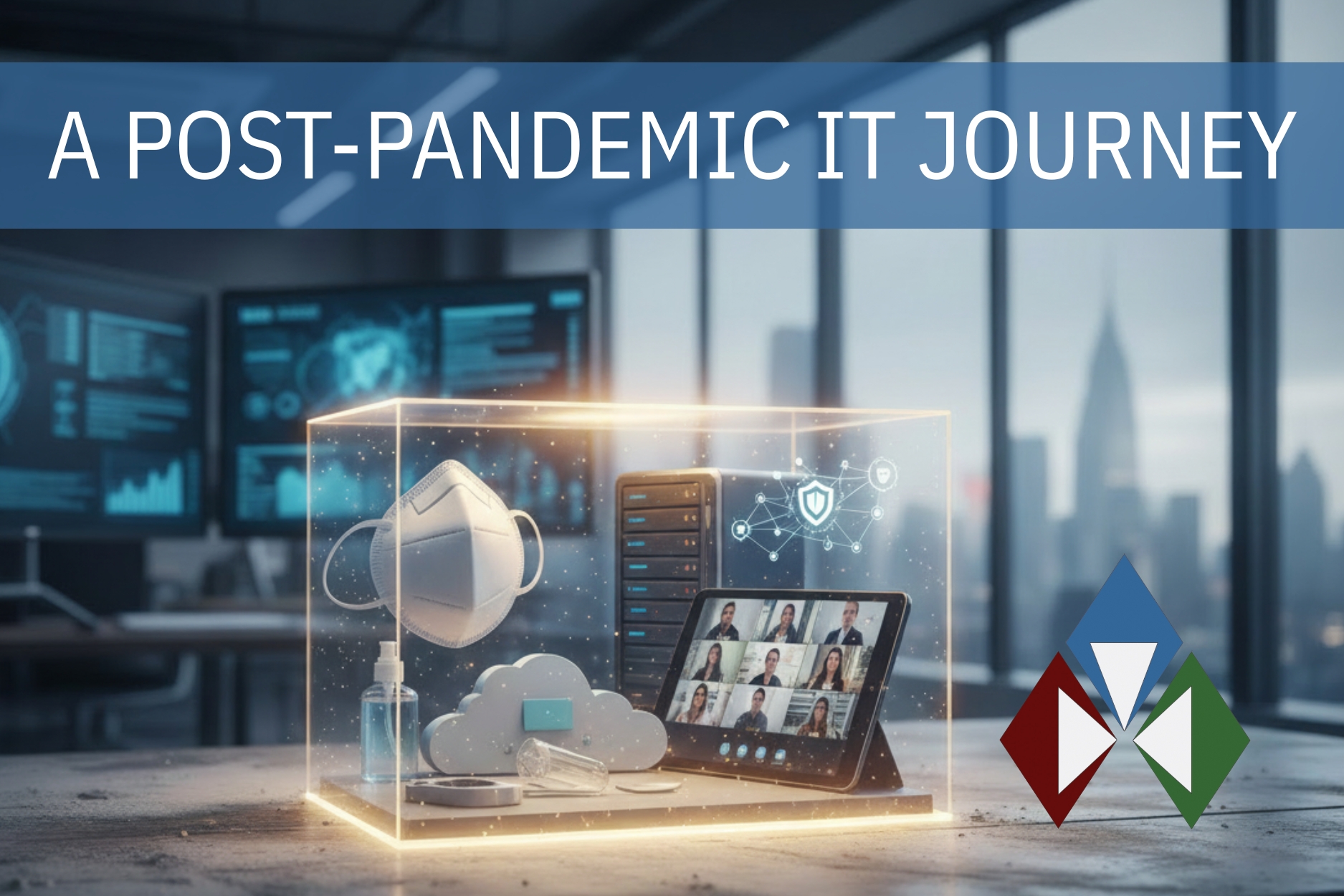
How COVID-19 Permanently Change IT & Security - and What Comes Next
How COVID-19 Permanently Change IT & Security - and What Comes Next
It’s hard to believe it’s been nearly six years since COVID-19 swept across the U.S.
In early 2020, IT teams everywhere were thrown into survival mode overnight. Laptops were rushed out the door. VPNs were stretched beyond design. Security controls were loosened “temporarily.” What many assumed would be a short disruption became a permanent shift.
Today, the emergency phase is long over - but the changes it triggered are not.
At Info Advantage, we’ve spent the last six years helping organizations adapt, recover and rethink how technology and security actually support the business. Looking back, a few shifts stand out as truly permanent - and they’re shaping what comes next.
1. Remote Work Didn’t Break IT - It Redefined It
Before COVID, remote work was often treated as a perk or exception. During the pandemic, it became the default. Now, hybrid work is simply how business operates.
What changed permanently:
Networks are no longer confined to offices
Users work from home, coffee shops, airports, and hotels
Devices move constantly between trusted and untrusted networks
This forced a fundamental mindset change:
the office is no longer the security perimeter - identity is.
VPN-only security models gave way to:
Cloud-based access controls
Device trust and posture checks
Zero-Trust principles replacing “inside vs. outside” thinking
Remote work didn’t weaken IT - it exposed outdated assumptions.
2. Security Became a Business Risk, Not an IT Problem
Pre-2020, cybersecurity conversations often lived quietly in IT departments. Post-pandemic, breaches, ransomware, and outages became front-page news - and board-level concerns.
Since COVID, we’ve seen:
Cyber insurance dictating security controls
Executives demanding risk reports, not just uptime metrics
Compliance and security becoming tied to revenue, contracts, and reputation
Security today is measured by:
Business impact, not just technical severity
Downtime costs, not just incident counts
Regulatory exposure, not just firewall rules
This shift elevated IT leaders - but it also raised expectations.
3. Cloud Adoption Accelerated - and Then Got Complicated
The pandemic pushed organizations to the cloud fast. Sometimes thoughtfully. Sometimes… not.
What started as a lifeline became the new normal:
Cloud email and collaboration
SaaS applications replacing on-prem software
Rapid migrations without long-term cost planning
Six years later, many businesses are now facing:
Unexpected cloud spend
Tool sprawl and redundant platforms
Security gaps between cloud services
The next phase isn’t “move to the cloud.” It’s optimize, secure, and govern what’s already there.
4. IT Staffing Changed - and Managed Services Filled the Gap
COVID triggered burnout, resignations, and skills shortages that still haven’t fully recovered. Experienced IT professionals became harder to find - and harder to retain.
As a result:
Internal IT teams shrank or stayed flat
Responsibilities increased without added headcount
Businesses leaned more heavily on trusted partners
Managed services stopped being a “nice to have” and became a strategic extension of internal teams - providing:
24/7 monitoring
Security expertise
Predictable costs
Coverage when internal resources are stretched thin
5. “Temporary” Decisions Became Permanent Risk
One of the most overlooked legacies of COVID is this:
short-term decisions made under pressure are still in place today.
We still uncover:
Shared accounts created “just to get through lockdown”
Former employee access never removed
Security exceptions that were never revisited
Aging hardware rushed into service and never replaced
These aren’t mistakes - they’re reminders that crisis-mode choices need cleanup.
What Comes Next: The Post-Pandemic IT Reality
Looking ahead, the next phase of IT and security isn’t about reacting. It’s about refinement.
We see five clear priorities emerging:
🔐 Identity First Security
Access control, MFA and conditional access will matter more than perimeter defenses.
☁️ Cloud Cost & Security Governance
Organizations will demand visibility, accountability and ROI from cloud platforms.
📋 Insurance-Driven Security Standards
Cyber insurance will continue shaping controls - sometimes more than regulations.
🧠 AI With Guardrails
AI tools will expand productivity, but governance will separate leaders from risks.
🤝 Stronger IT Partnerships
Businesses will rely on advisors who understand both technology and business outcomes.
Where Info Advantage Fits In
The pandemic didn’t just change technology - it changed expectations.
At Info Advantage, we help organizations:
Clean up post-pandemic risk
Strengthen identity and access security
Optimize cloud environments
Prepare for insurance, compliance, and future threats
Build IT strategies designed for how people actually work today
Because reacting got us through 2020 - but planning is what gets us through what’s next.